
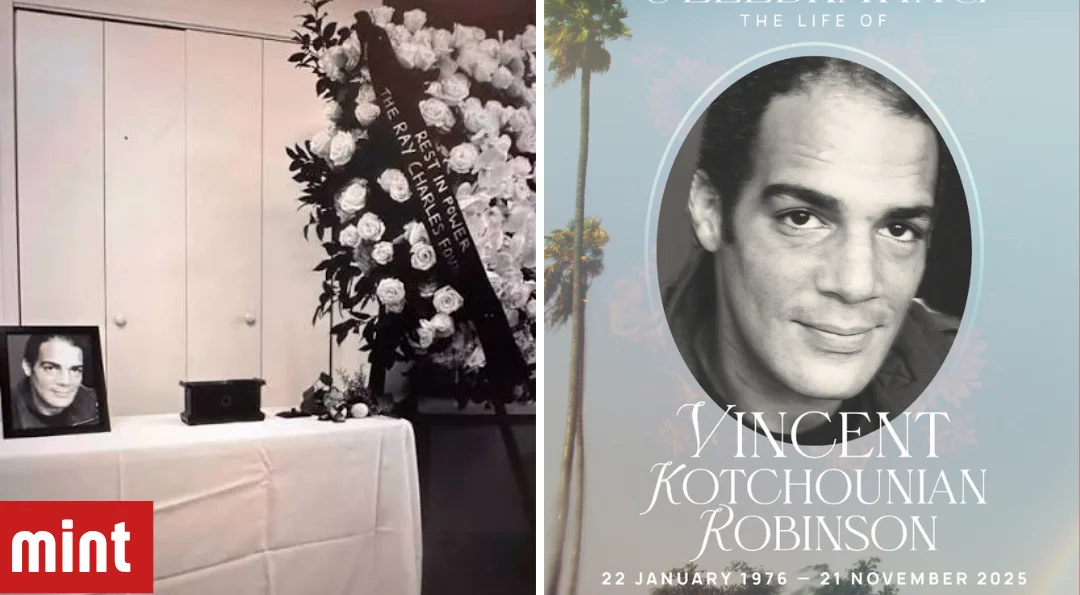
Vincent Kotchounian Robinson (January 22, 1976–November 21, 2025) was the son of music legend Ray Charles Robinson and French-Armenian songwriter and photographer Arlette Kotchounian. His family’s memorial describes a life built around education, mixed martial arts, music, practical creativity, travel and Buddhist practice rather than a career in the recording spotlight.
The obituary also resolves—or at least substantially clarifies—two details that older biographies often get wrong. It says Vincent was born in Les Lilas, France, in 1976, not Los Angeles in 1977. And although articles have credited him with a Ray Charles album cover, the published credits for the likely release name his mother, not Vincent.
The obituary that clarified his story
The family obituary for Vincent Kotchounian Robinson gives the most detailed public account of his life. It identifies his full name, parents, birth and death dates, birthplace, education, work and interests.
According to that memorial, Vincent was born January 22, 1976, in Les Lilas, a commune immediately east of Paris. This is more specific than the many online profiles that list only 1977 and place his birth in Los Angeles. The earlier year is also supported by a 2018 Armenian Mirror-Spectator profile in which Arlette said she gave birth to Vincent in 1976.
The family record is not an independently audited résumé, so its affectionate personality descriptions should remain attributed to those who knew him. For identity and life dates, however, it is substantially closer to the subject than the generic biographies published before and after his death.
Ray Charles, Arlette Kotchounian and a bicultural childhood
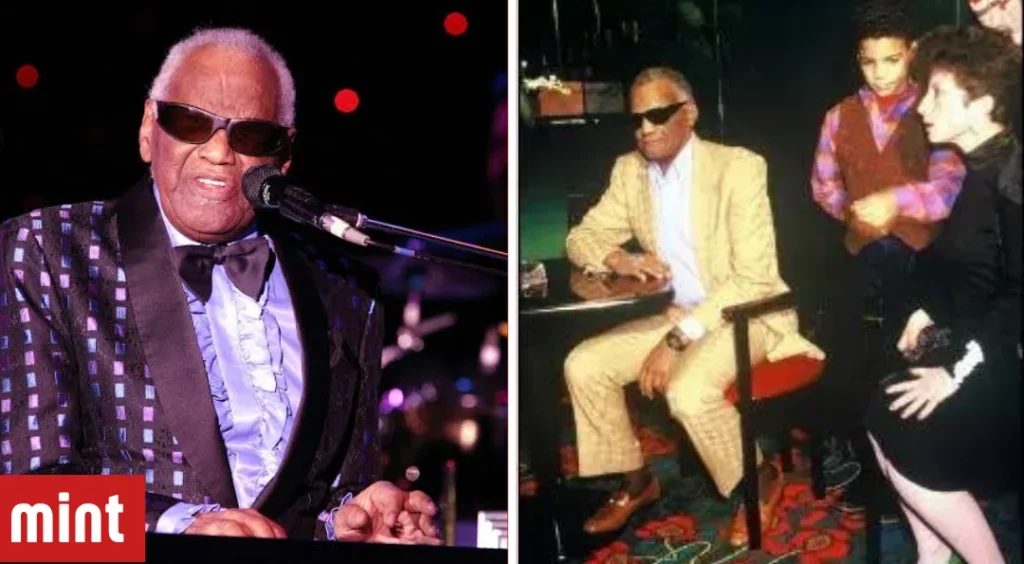
Vincent’s father was Ray Charles, the influential singer, pianist and songwriter whose work crossed gospel, blues, jazz, country and soul. His mother, Arlette Kotchounian, built her own creative career as a lyricist, singer and photographer.
In a 2018 interview with the Armenian Mirror-Spectator, Arlette discussed her collaboration and friendship with Ray Charles and spoke directly about their son. She said Vincent carried both her family name and his father’s name. She also explained that he spoke English with his father and French with her and had begun asking about his Armenian family history.
Those first-party details offer more than a celebrity-family label. They place Vincent between French, Armenian and American family worlds without requiring assumptions about his citizenship or how he personally defined his identity.
Education, martial arts and the work he chose
The memorial says Vincent graduated from Marymount College and the University of Southern California. It does not identify his degree subjects or graduation years, so more detailed claims about what he studied would be speculation.
It also describes him as a licensed mixed martial arts instructor. “Instructor” is the supported term. No reliable professional fight record was found, and teaching MMA should not be turned into a claim that he competed professionally.
Some secondary biographies attach Vincent to a particular Los Angeles gym or call him a fitness trainer. Those claims appear to trace partly to old social profiles rather than an employer or licensing record. The family-supported description—licensed MMA instructor—is more precise without overstating what the public evidence can show.
Creativity beyond the recording studio
The obituary’s most distinctive details concern what Vincent did with his hands. His family remembered his enthusiasm for DJing, building bicycles and flying custom drones. They also described a love of nature, animals and music and noted travels through Asia, Cuba, Puerto Rico and France.
In 2012, according to the memorial, he received his Gohonzon, an object of devotion used in Nichiren Buddhist practice. The family said his friend Phillip Yi supported him in his faith. These details help explain Vincent on his own terms, rather than treating his life only as an extension of his father’s fame.
They should not be embellished into business ventures, professional DJ credits or engineering expertise. They are documented interests and practices, not evidence of additional careers.
Did Vincent Kotchounian design a Ray Charles album cover?
Several entertainment pages say that Vincent designed or photographed an album cover for his father around 1989.
The most likely source of the confusion is Ray Charles’s 1990 album Would You Believe? AllMusic’s credits for that release list Arlette Kotchounian for artwork and photography and Antoine Leroux-Dhuys for design. Vincent is not listed.
That does not prove he had no informal involvement, but it does mean there is no basis to give him the formal credit. Unless an original sleeve, contract or authoritative catalog identifies Vincent, the album-cover story should be treated as unverified and probably misattributed from mother to son.
What a federal court record says about his family status
Vincent’s name appeared in records connected with a dispute between the Ray Charles Foundation and seven of Charles’s children. A March 2012 notice filed in federal court lists “Vincent Kotchounian” as a sibling of the defendants and a possible copyright beneficiary.
That language is important: the cited notice did not name Vincent as one of the seven defendants. It also did not decide that he owned any copyright or establish the financial value of a possible interest.
The foundation’s complaint said Ray Charles intended to establish separate $500,000 trusts for each of his 12 children. A contemporary Pollstar report summarized the allegation. Even so, an estate-planning allegation from 2012 does not reveal what Vincent later received, retained, spent or owned.
His death and the life his family remembered
Vincent died on November 21, 2025, at Cedars-Sinai Medical Center in Los Angeles. He was 49. His obituary says he had Stage 4 lung cancer.
The memorial records that his mother survived him, along with an uncle, nieces, cousins, extended French, American and Armenian family, and friends. It presents him as creative, independent, compassionate and funny. Those are his family’s words and memories—not conclusions a distant biography can independently measure.
What the public record does show is a life with several clear threads: formal education, disciplined martial-arts instruction, hands-on making, music, travel, faith and an interest in the histories that connected his family across countries.
Why no responsible net-worth estimate is possible
No reliable public evidence supports a defensible net-worth estimate for Vincent Kotchounian.
Net worth is assets minus liabilities. The available sources do not disclose his career earnings, savings, investments, property equity, business ownership, debts, taxes, medical costs or probate inventory.
Any precise figure would therefore be guesswork. This is the same evidence standard readers should expect across The Fame Mint’s celebrity biographies: a famous family connection is not a substitute for a personal balance sheet.
Frequently asked questions
Who were Vincent Kotchounian’s parents?
His parents were Ray Charles Robinson and Arlette Kotchounian.
Was Vincent born in 1976 or 1977?
The strongest evidence supports 1976. His obituary gives January 22, 1976, in Les Lilas, France, and Arlette said in a 2018 interview that Vincent was born in 1976. The commonly repeated 1977 date appears in weaker secondary profiles.
What did Vincent Kotchounian do for a living?
His family described him as a licensed mixed martial arts instructor. The obituary also says he graduated from Marymount College and USC. It does not name a licensing body, degree subject, employer or dates of work.
Did he design one of Ray Charles’s album covers?
That claim is not verified. For the release most often associated with the story, Would You Believe?, AllMusic credits Arlette Kotchounian with artwork and photography and Antoine Leroux-Dhuys with design.
Was Vincent a defendant in the Ray Charles copyright case?
Not in the cited 2012 filing. That notice identified him as a sibling of the defendants and a possible copyright beneficiary, not as one of the seven defendants.
When did Vincent Kotchounian die?
He died on November 21, 2025, at age 49. His family obituary says he died after Stage 4 lung cancer.
Conclusion
Vincent Kotchounian Robinson was connected to musical history through both parents, but the surviving record describes a life with its own priorities. He pursued education and martial arts, mixed music with hands-on creativity, traveled widely, practiced Buddhism and explored his Armenian family story.
The fairest account also corrects what cannot be supported: the family record points to a 1976 birth in France, formal album credits do not name him, the federal notice did not list him as a defendant, and no reliable net-worth calculation is possible. Those distinctions make his biography more accurate—and more recognizably his own.
Read more carefully researched celebrity profiles on The Fame Mint.