
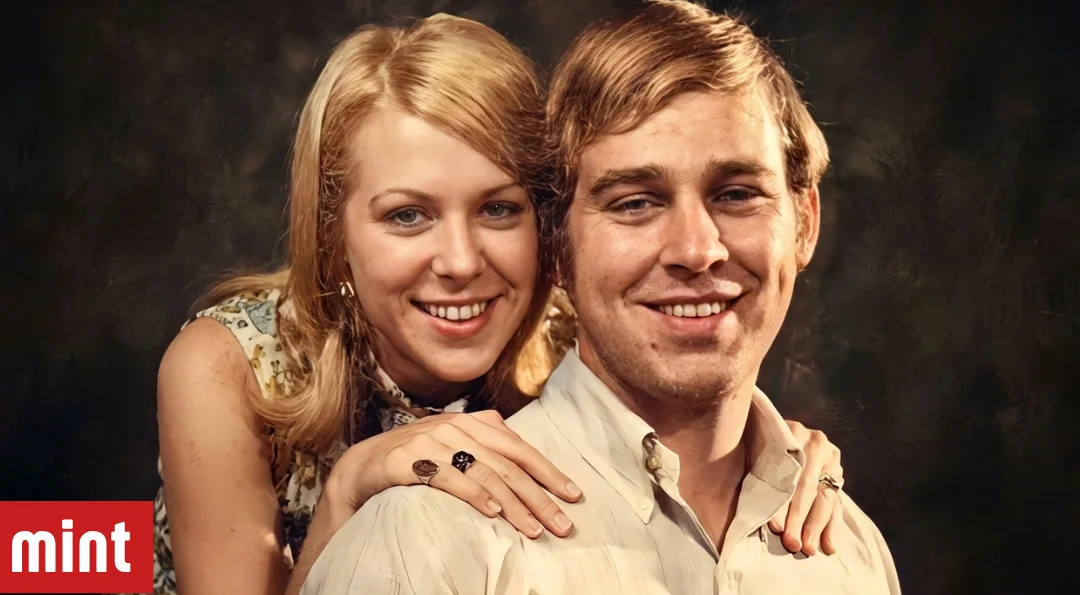
Margie Washichek was Jimmy Buffett’s first wife, but the reliable record says more than that. A 1969 Mobile newspaper profile identifies her as the city’s first Miss USS Alabama, an Azalea Trail participant and a Gayfer’s Teen Board model. It also records her evaluating Buffett’s songs before the newlyweds moved to Nashville. They married in 1969; credible biographies disagree on whether the divorce was finalized in 1971 or 1972. Her birth date, later family life, current circumstances and net worth are not publicly verified.
The 1969 profile that preserves Margie Washichek’s own voice
The strongest source about Washichek is not a modern celebrity biography. It is “A Winning Team,” a profile by Lee Haug published in the Mobile Press on July 21, 1969 and preserved in the Pascagoula Public Library’s Buffett Family File.
The article appeared before Buffett had released his debut album or developed the Key West identity that later defined his work. It described Jimmy and Margie as Mobile newlyweds preparing to live in Nashville after he signed a songwriting agreement with Russell-Cason Music.
Washichek was quoted as an active listener rather than a silent figure in the background: “I’m fairly critical, so Jimmy plays his songs for me first and I tell him what I think of them.” She also spoke of giving him encouragement as he tried to establish a music career.
That contemporary account does not prove that she co-wrote, managed or financed Buffett’s work. It does establish something more precise: he sought her opinion on new songs, and she described providing criticism and moral support at the start of his professional career.
Mobile knew her before Nashville did
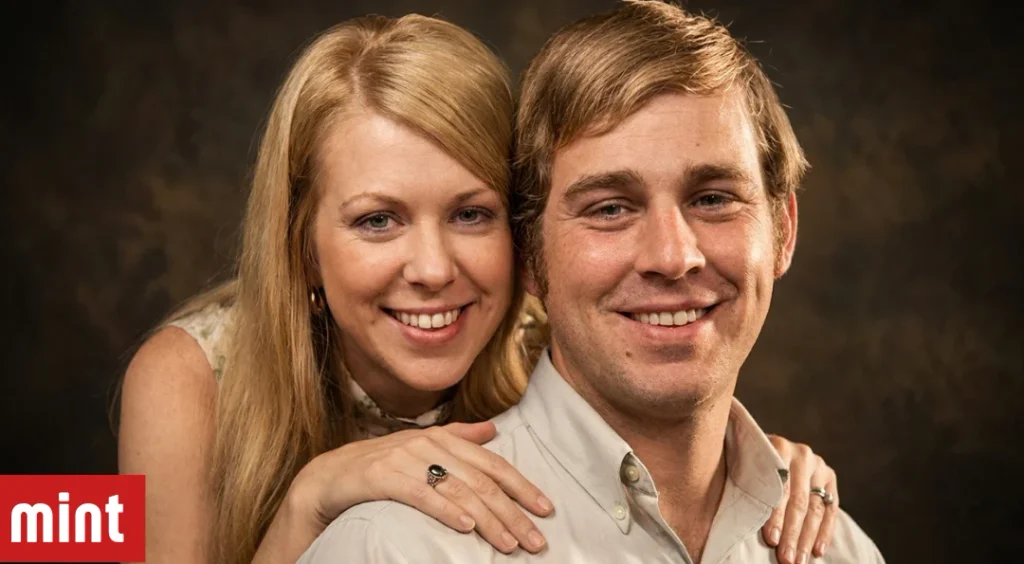
The same clipping says Mobile readers would remember Washichek from several local roles. Its article and photo caption provide the following evidence:
| Documented detail | What the 1969 clipping establishes | What it does not establish |
|---|---|---|
| Miss USS Alabama | Washichek was Mobile’s first holder of the title | That she won the Miss Alabama state pageant |
| Azalea Trail | She was an Azalea Trail maid and a court scholarship winner | A complete pageant history or later civic role |
| Gayfer’s Teen Board | She modeled for the department store’s teen board | A professional modeling career beyond that programme |
| Buffett’s early songs | She listened first and offered her opinion | A songwriting, production or management credit |
| Nashville period | The newlyweds planned to relocate after Buffett signed in Nashville | Her complete later employment history |
Calling Washichek simply an “Alabama beauty queen” is understandable shorthand; The Washington Post used that description in its 2023 obituary of Buffett. The original Mobile coverage is more informative. It ties her to specific local institutions and avoids confusing Miss USS Alabama with the statewide Miss Alabama competition.
What Margie Washichek ASCAP job adds to the Nashville chapter
A second historical clipping in the same library file shows Margie and Jimmy at a Country Music Association Week event in Nashville. Its caption identifies Jimmy as a Billboard staff writer and Margie as an ASCAP receptionist.
That is a limited but useful career fact. ASCAP—the American Society of Composers, Authors and Publishers—was part of the music-business setting in which Buffett was then working. The clipping places Washichek inside that professional environment through her own job, not only through her marriage.
The evidence does not supply her dates of employment, duties, later positions or a complete résumé. “Worked as an ASCAP receptionist during the Nashville period” is supportable; a broader claim that she built a music-industry career is not.
The Spring Hill wedding and a difficult chronology
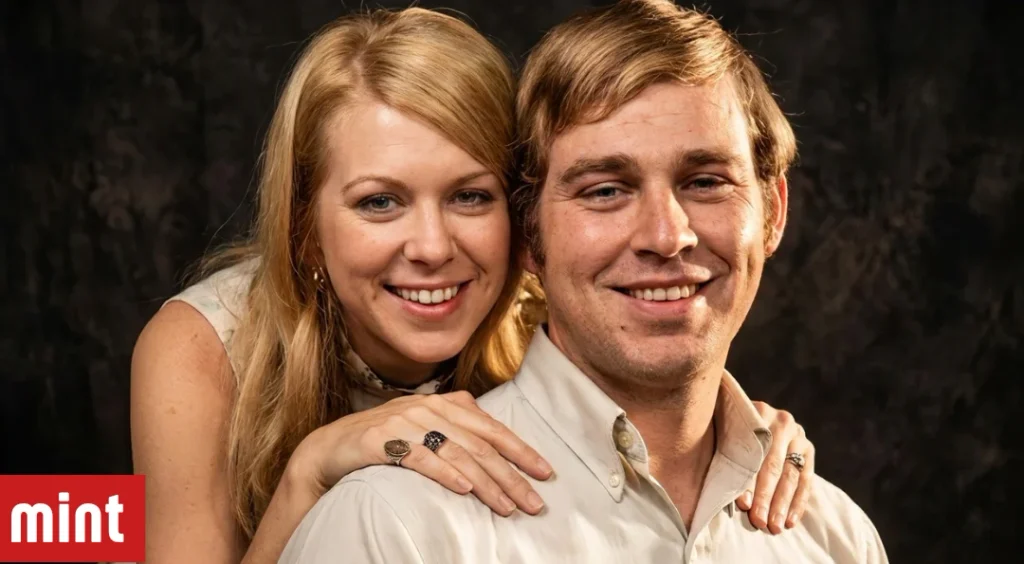
The Encyclopedia of Alabama, a programme of Auburn University Outreach, says Buffett proposed after completing his history degree and that the couple married in 1969 at St. Joseph’s Chapel on the Spring Hill College campus in Mobile. The July newspaper profile confirms they were newlyweds that month.
The marriage belongs to Buffett’s pre-fame Nashville years. He worked for Billboard, released Down to Earth in 1970 and struggled to find commercial momentum. The same Alabama reference says poor record sales and difficulty securing club dates strained the marriage.
That account provides career context, not a complete explanation of a private relationship. It would be unfair to turn financial pressure into a proven divorce cause or assign blame to either person without a direct statement or legal record.
Why 1971 and 1972 both appear in divorce accounts
Reliable published sources do not give one consistent divorce year. The Encyclopedia of Alabama says Buffett divorced his first wife in 1971. Biography.com lists the marriage as 1969–1972. The Washington Post places Buffett’s move to Key West in spring 1972 after a failed marriage and stalled Nashville career, but it does not provide a court date.
These accounts support the sequence more strongly than an exact legal endpoint: the marriage was breaking down during the Nashville period, and Buffett moved into his Key West chapter by spring 1972. Without an accessible divorce decree, the safest wording is that published biographies variously date the divorce to 1971 or 1972.
The disagreement may reflect the difference between separation and legal finalization, but that is only a possibility. It should not be presented as the answer until a primary record establishes the dates.
After Nashville, evidence gives way to recycled biography
Modern profile pages attach a surprising number of personal details to Washichek. The authoritative sources reviewed here do not verify an exact birth date, age, birthplace, education, acting career, later spouse, children, present residence or current occupation.
One widely repeated birthday—December 25, 1946, in Pascagoula—is also Jimmy Buffett’s documented birth information. No reliable source reviewed for this article establishes that the same date and place belong to Washichek. Repeating it would risk transferring Buffett’s biography to his former wife.
There is also no defensible estimate of Margie Washichek’s net worth. Her old pageant activities, ASCAP reception job and former marriage disclose neither present assets nor liabilities. Buffett’s later earnings and estate cannot simply be assigned to a spouse from a marriage that ended before his major commercial success.
Privacy matters here. Washichek had a small public profile in 1969, but she did not build the decades-long public career that Buffett did. A useful biography can document her role in that early chapter without trying to reconstruct her later private life from people-search records or unsupported entertainment pages.
Four answers anchored to the surviving record
Why is Washichek part of Jimmy Buffett’s early music story?
She married Buffett in 1969 as he was beginning his professional career. A contemporary profile records that he played songs for her first and that she offered criticism and encouragement before they moved to Nashville.
Where did the couple’s 1969 wedding take place?
The Encyclopedia of Alabama says they married at St. Joseph’s Chapel on the Spring Hill College campus in Mobile. A July 21, 1969 newspaper profile described them as newlyweds but did not give an exact wedding date.
Why can’t the divorce be assigned one certain year?
Established biographies conflict. The Encyclopedia of Alabama gives 1971, while Biography.com gives 1972. No accessible primary divorce record reviewed here resolves the difference, so both years should be attributed rather than one being declared certain.
Is a personal fortune for Washichek verifiable?
No. The public sources do not disclose her assets, debts, income, investments or property interests. Exact figures on biography sites are therefore unsupported, and Jimmy Buffett’s later wealth is not evidence of hers.
The clearest portrait comes from before the fame
The surviving record is narrow, but it is not empty. In 1969, Margie Washichek had identifiable roles in Mobile civic life, listened critically to Jimmy Buffett’s early songs and moved to Nashville with him while working as an ASCAP receptionist. That evidence gives her more dimension than the label “first wife” without inventing a complete private biography.
Her later life remains largely outside dependable public documentation, and the divorce-year conflict remains unresolved. Keeping those limits visible is the most accurate way to preserve the part of her story that can be told. For more evidence-led profiles that separate the record from repetition, visit The Fame Mint.