
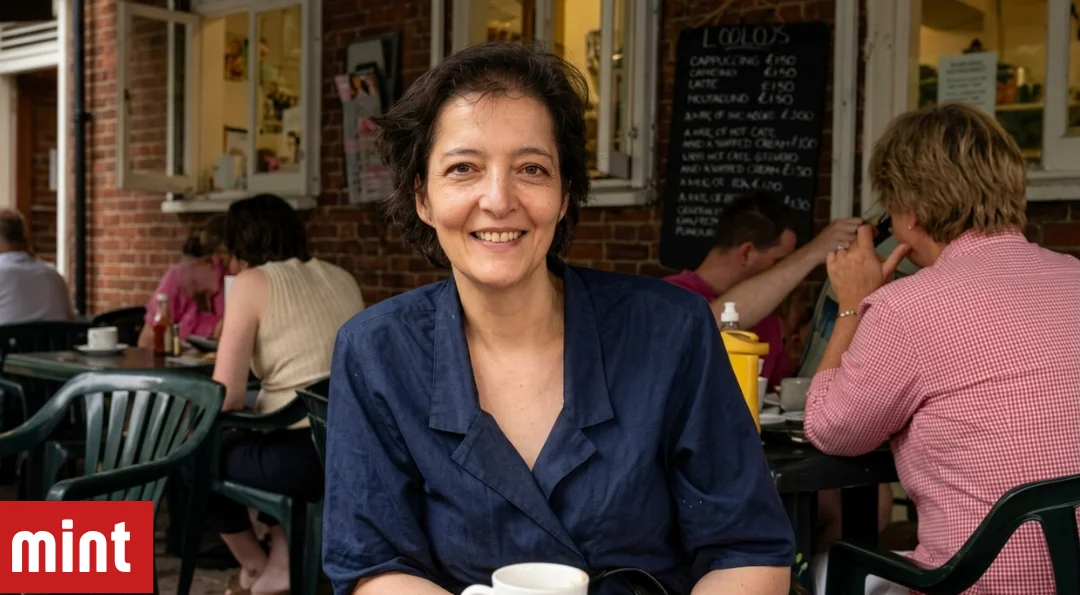
Christina Erika Carandini Lee belongs to a family name that carries unusual weight in film, music, and European history. Her father, Sir Christopher Lee, played some of cinema’s most recognizable villains, from Count Dracula and Francisco Scaramanga to Saruman and Count Dooku. Her mother, Birgit “Gitte” Krøncke Lee, worked as a model and painter. Yet Christina’s own life appears only in narrow strips of the public record.
That imbalance creates a problem for anyone searching her name. A small number of established facts sit beside dozens of recycled claims about her career, marriage, children, fortune, and current life. Frequently, those claims appear without a record, interview, or named source. Repetition can make them look settled even when the evidence remains weak.
This biography takes a different route. It places Christina at the center, then moves outward through the circles that can actually be documented: her identity, her parents, the Carandini name, her family’s international life, and her credited voice work. Just as importantly, it marks the boundary where reliable knowledge ends. That boundary does not make her story incomplete. Instead, it helps readers see the difference between a public figure’s daughter and a person who has built a public career of her own.
Christina Erika Carandini Lee in One Clear Answer
Christina Erika Carandini Lee is the only daughter of British actor Sir Christopher Lee and Danish painter and former model Birgit “Gitte” Krøncke Lee. The BFI’s family chronology reports that she was born in Lausanne, Switzerland, in November 1963. She later received guest voice or narration credits on fantasy-metal recordings associated with Christopher Lee and Rhapsody of Fire.
However, dependable sources do not establish a conventional acting or singing career for Christina. They also do not provide a trustworthy public net worth, complete employment history, or a well-documented account of her private relationships. Therefore, the most accurate description is simple: she is Christopher and Gitte Lee’s daughter and a credited guest performer on a limited group of recordings.
That answer may sound restrained. Nevertheless, it is more informative than a long profile filled with unsupported measurements, estimates, and lifestyle claims. Christina’s verified record is small, but it contains a distinctive family story and several real creative credits.
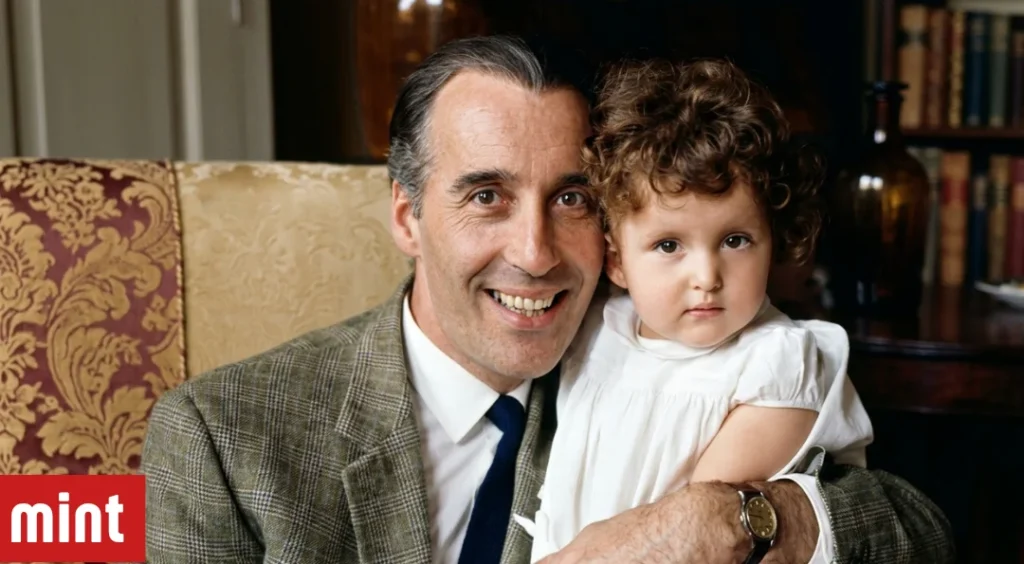
The Verified Center: Christina Erika Carandini Lee Facts
The following snapshot includes only details supported by established reference works, institutional sources, major reporting, or music-credit databases. It avoids filling blank spaces with assumptions.
| Category | Verified or carefully stated information |
|---|---|
| Full name | Christina Erika Carandini Lee |
| Known for | Only daughter of Christopher Lee and Gitte Lee; guest narration and spoken-vocal credits |
| Birth | November 1963 |
| Birthplace | Lausanne, Switzerland |
| Father | Sir Christopher Frank Carandini Lee, actor and singer |
| Mother | Birgit “Gitte” Krøncke Lee, Danish painter and former model |
| Siblings | None publicly documented; reliable obituaries call her the couple’s only daughter |
| Selected credit | Guest artist on Rhapsody of Fire’s The Cold Embrace of Fear |
| Public net worth | Not reliably established |
| Current occupation | Not reliably established in accessible authoritative sources |
Readers should notice what the table does not do. It does not turn a family connection into a profession. It also does not use an algorithmic fortune estimate as though it were a financial filing. Finally, it does not publish personal details simply because lesser-known sites repeat them.
Circle One: Christina Erika Lee’s Birth in Switzerland
Why Lausanne Is Part of Christina Lee’s Story
Christina’s birthplace reflects her parents’ international life. According to the BFI’s detailed Sight and Sound account of Christopher Lee, Christopher married Gitte in London on March 17, 1961. Twelve months later, the couple moved to Switzerland. Christina was then born in Lausanne in November 1963.
Switzerland served as a practical base while Christopher worked frequently in continental Europe. During that era, he appeared in productions across several countries instead of remaining inside one national film industry. Consequently, Christina entered a family already accustomed to crossing borders for work.
The same BFI history says the Lees had decided to return to London by early 1965. Therefore, Lausanne marks Christina’s birthplace, but it should not automatically be described as the setting of her entire childhood. The available record supports a Swiss beginning followed by the family’s return to Britain.
The Exact Birthday Problem
Many online profiles give Christina’s birthday as November 23, 1963. Music databases and genealogy-style pages repeat that date, and it may be correct. However, the strongest accessible narrative source used here confirms only November 1963. This article therefore avoids presenting the exact day as independently proven.
That distinction illustrates a wider research rule. A precise detail is not necessarily a well-sourced detail. In fact, exact dates often spread from one database to another without revealing the original record. Once copied widely, the information acquires an appearance of authority that its citation history may not deserve.
For age calculations, readers can still use the confirmed year. Christina turned 62 during 2025 if the November 1963 birth month is accurate, and she remains 62 until her birthday in November 2026. Still, age should not become a substitute for biography. It tells us where someone sits on a calendar, not how that person has lived.
Circle Two: Christopher Lee as Christina’s Father
A Career That Made the Family Name Globally Familiar
Christopher Lee’s career explains why the public searches for his daughter decades after her birth. He worked on screen for nearly seventy years and crossed several generations of popular culture. Horror audiences knew him as Hammer’s Dracula. James Bond fans knew him as Scaramanga. Later, fantasy and science-fiction viewers met him as Saruman and Count Dooku.
Institutional recognition followed that longevity. BAFTA’s account of his 2011 Fellowship says he had appeared in more than 200 films and describes the Fellowship as recognition for an outstanding contribution to film. Two years later, the BFI also made him a Fellow.
The British state recognized a broader contribution. The official London Gazette record of the 2009 Birthday Honours lists Christopher Frank Carandini Lee for knighthood for services to drama and charity. These records matter because they show the scale of the public legacy surrounding Christina without borrowing fame for her.
Christopher Lee’s Public Image and His Family Life
Christopher often played imposing or dangerous figures. His height, deep voice, and controlled manner made those roles especially memorable. However, a screen persona cannot serve as evidence about a private household. It would be easy to describe Christina’s childhood through the atmosphere of Dracula or Saruman, but that would replace biography with cinematic imagery.
Reliable sources establish simpler points. Christopher and Gitte married in 1961, had one daughter, and remained married until his death. When Christopher died in June 2015, the Guardian’s obituary identified Gitte and Christina as his surviving wife and daughter.
That concise notice provides stronger family evidence than a lengthy anonymous profile. It confirms Christina’s place in his immediate family at the end of his life. Nevertheless, it does not reveal her occupation, feelings, or private responsibilities. A respectful biography should not make the obituary carry claims that it never stated.

A Shared Interest in the Spoken Voice
One clear point connects father and daughter creatively: both appear in album credits built around narration. Christopher’s voice had long been one of his defining tools. Even when viewers could not see him, his measured bass could convey authority, menace, ceremony, or myth.
Christina’s guest credits sit in that same spoken-word territory. They do not prove that she trained as an actor or pursued voice work full time. Even so, they show that she participated in recorded storytelling, sometimes alongside her father.
This connection gives the credits meaning beyond a line in a database. Rhapsody of Fire’s fantasy albums use narrators to guide listeners through an invented world. Christopher supplied the Wizard King, while Christina received credits connected with Lothen. Therefore, father and daughter did not simply sing on a conventional track together. They contributed voices to a continuing dramatic narrative.
Circle Three: Birgit “Gitte” Lee as Christina’s Mother
Gitte Lee’s Danish and Artistic Background
Birgit Krøncke, widely known as Gitte Lee, brought another artistic strand into Christina’s family. Reliable accounts describe her as Danish, a former model, and a painter. The BFI identifies her specifically as a Danish painter and Dior model when discussing her 1961 marriage to Christopher.
Those details help correct a common imbalance. Online biographies often devote almost every paragraph to Christopher, then treat Christina’s mother as a footnote. Yet Gitte’s own background connected fashion, visual art, Denmark, and Britain. Christina’s family setting therefore involved more than film acting.
Still, the public record on Gitte remains modest compared with Christopher’s. A writer should not invent a detailed exhibition history or fashion résumé merely to make the maternal section symmetrical. The defensible point is that Christina grew up with two parents connected to creative work, although only one became a global screen star.
A Marriage Spanning More Than Five Decades
Christopher and Gitte married in London in March 1961. Their marriage lasted until Christopher’s death in 2015, a span of more than 54 years. During those decades, his work took the family from Britain to Switzerland, continental film locations, and periods connected with Hollywood.
Public reports also show Gitte managing the announcement of Christopher’s death with care. News accounts said she waited until family members and friends had received the news before it became public. That fact reveals a practical decision in a difficult moment, although it does not authorize broad claims about anyone’s personality.
For Christina, the marriage created a stable documentary thread: she remained the couple’s only child throughout their long life together. Beyond that, the record becomes private. We do not need to reconstruct family conversations or assign hidden roles in order to recognize the length and continuity of the household.
Circle Four: The Carandini Name in Christina Erika Carandini Lee
Where the Carandini Name Comes From
“Carandini” is not a decorative middle name added for show. It came to Christina through her father’s maternal family. Christopher’s full name was Christopher Frank Carandini Lee. His mother was Countess Estelle Marie Carandini di Sarzano, which carried the family name into his identity and then into Christina’s.
The Wikipedia biography of Christopher Lee offers readers a useful map of this lineage and links onward to related people and places. It identifies Christopher’s maternal great-grandfather as Jerome Carandini, Marquis of Sarzano, and his great-grandmother as English-born opera singer Marie Carandini.
Wikipedia works best here as an orientation tool, not as the only authority. The BFI independently confirms Christopher’s full Carandini name and identifies his mother as Contessa Estelle Marie Carandini di Sarzano. Together, those sources support the basic line of transmission.
What Ancestry Can and Cannot Tell Readers
Family lineage adds historical context, but it can also invite exaggeration. Some profiles jump from the Carandini surname to sweeping claims about nobility, inherited status, wealth, or direct descent from major historical rulers. Those claims require much stronger genealogical evidence than a modern biography page usually provides.
The safe conclusion is narrower. Christina carries a surname associated with her father’s Italian maternal ancestry. The family tree also includes Marie Carandini, an opera singer, so recorded performance existed in earlier generations. However, ancestry does not establish Christina’s own occupation, finances, title, or social standing.
In other words, a meaningful name remains part of identity, not a complete identity. Readers can appreciate the historical echo without treating it as proof of a modern lifestyle.
The Visual Record of Christopher Lee
Museum collections help place the family’s fame in cultural context. The UK’s National Portrait Gallery record for Christopher Lee catalogs a 1995 portrait by photographer Brian Aldrich and identifies Lee as an actor who appears in several collection portraits.
The entry does not tell us new facts about Christina. Nevertheless, it demonstrates how institutions preserve the public image of her father. His face, roles, honors, and photographs became part of an archive. Christina’s life, by contrast, never developed the same institutional footprint.
That contrast matters. Search engines often place a famous parent’s archive beside scattered images of a child and make both appear equally public. They are not. A museum record invites study of the sitter and artwork. It does not turn every relative into an open subject for speculation.
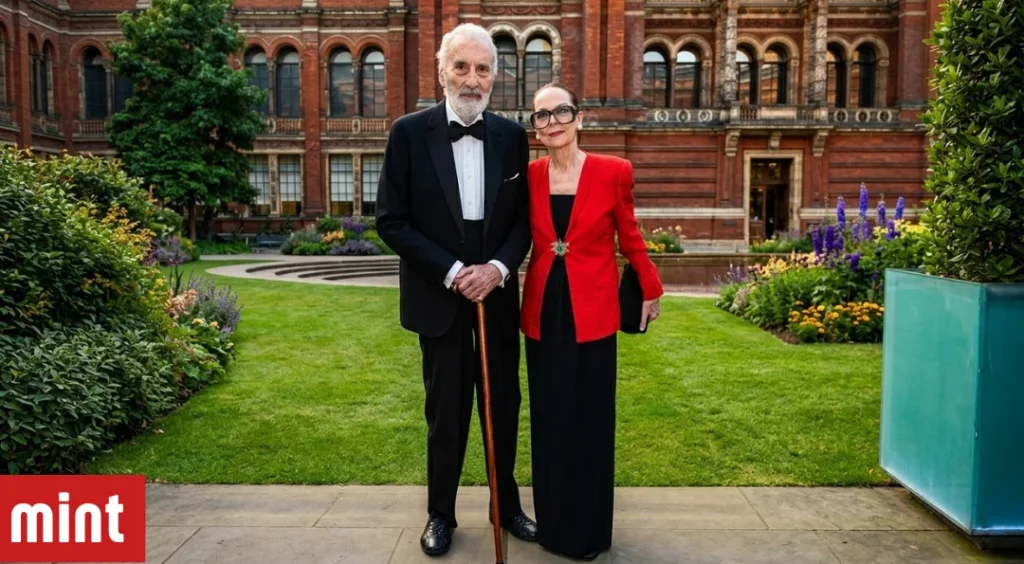
Circle Five: Christina Lee’s Narration and Music Credits
Why “Guest Artist” Is the Most Accurate Label
Music-credit databases use precise role labels. Depending on the release, Christina appears as a guest artist, narrator, spoken vocalist, or voice actor. Those labels describe specific contributions. They do not automatically mean she worked professionally as a singer across a wider career.
“Guest artist” is therefore the best general description. It acknowledges real creative work while keeping its scale accurate. Christina participated in a cluster of fantasy and metal recordings, several of which also featured Christopher Lee. Moreover, her character-based spoken work helped connect scenes in an ongoing story.
Calling her simply an “actress” can mislead readers into expecting a filmography of conventional roles. Calling her a “singer” can suggest albums or concerts under her own name. The records support neither conclusion clearly. By contrast, guest narration is specific, verifiable, and interesting in its own right.
Triumph or Agony and the First Rhapsody of Fire Link
Rhapsody of Fire released Triumph or Agony in 2006. The record continued the Italian band’s combination of symphonic metal, fantasy narrative, choirs, and spoken characters. Christopher Lee and Christina both provided spoken vocals, according to the overview of Christopher’s personal life and music work.
Christina’s role is commonly identified as Lothen, a character within the band’s “Dark Secret” storyline. That kind of performance differs from a lead vocal. Instead of carrying a melody through verses and choruses, a narrator or voice actor helps establish characters, transitions, and plot.
The project also arrived when Christopher was expanding his connection with heavy metal. His dramatic voice suited the genre’s interest in myth, battle, history, and theatrical scale. Christina’s involvement created a literal family pairing inside that imaginative world.
Christina Erika Lee on The Cold Embrace of Fear
The clearest reader-friendly credit page is AllMusic’s entry for The Cold Embrace of Fear: A Dark Romantic Symphony. It lists both Christina Lee and Christopher Lee among the guest artists. It also describes the release as a fantasy-driven Rhapsody of Fire project built around guest narration.
Dates can look inconsistent across editions. Some sources call it a 2010 EP, while AllMusic displays a January 18, 2011 release date. That difference likely reflects territory, format, or catalog release timing rather than two separate works. Therefore, readers should focus on the title and credit instead of treating the year variation as evidence of an error.
Christina’s role is associated with Lothen, while Christopher appears as the Wizard King. The shared credit remains one of the strongest examples of their recorded collaboration.
The Frozen Tears of Angels and a Continuing Story
Rhapsody of Fire’s The Frozen Tears of Angels appeared in 2010. AllMusic places it immediately before The Cold Embrace of Fear in the band’s discography and records the same 2009 recording period for the related project. Credit databases identify Christina with narration as Lothen.
The significance lies in continuity. Christina did not appear only as a novelty cameo attached to her father’s name. Instead, the Lothen credit recurred inside a serialized fantasy narrative. A returning character helps listeners recognize relationships and follow the story across releases.
Even so, readers should keep the contribution in scale. Recurring narration across a few related albums remains a specialized credit, not proof of a broad entertainment career. Christina’s documented work is notable because it is specific and unusual, not because it resembles her father’s enormous filmography.
From Chaos to Eternity and Christina Lee’s Later Credit
The band’s 2011 album From Chaos to Eternity continued the sequence. The AllMusic album record lists Christina Lee and Christopher Lee among its guest artists and gives a July 12, 2011 release date.
By this point, the voice cast had become part of the series’ architecture. Musicians handled the metal and orchestral performances, while guest voices gave the fictional world a dramatic frame. Christina’s contribution belongs within that ensemble.
This credit also broadens the documented picture of her slightly. She did more than appear in family photographs or accompany a famous parent to an event. She took part in a finished commercial recording with an identifiable role. Nevertheless, no authoritative evidence shows that she turned those sessions into a continuing profession after the project.
Circle Six: Public Appearances Versus a Public Career
What an Appearance Actually Establishes
Photograph archives, entertainment databases, and retrospective programs contain appearances by Christina, often beside one or both parents. Such records can establish that she attended a particular event or appeared as herself. However, they cannot automatically establish an occupation.
This distinction matters because biography sites often build a career label from minimal evidence. Someone shown in a documentary about a parent may appear under “Self.” A person who joins a televised tribute can receive a database entry. Neither circumstance necessarily means that the person pursued acting.
For Christina, the strongest work-like evidence comes from the music credits, not from red-carpet photographs. Therefore, an accurate profile separates attendance, self-appearance, and character narration instead of grouping everything under “actress.”
Christina Erika Carandini Lee and the Meaning of Privacy
The limited public record suggests privacy, but writers should phrase that observation carefully. We can say Christina has maintained a low public profile because few interviews, official biographies, or professional records appear under her name. We cannot claim to know her reasons unless she has explained them.
Perhaps she preferred life outside celebrity culture. Perhaps her work occurred in a field that does not generate entertainment coverage. Alternatively, records may exist outside the sources indexed prominently online. Each possibility remains possible, yet none should be presented as fact.
Privacy is not an empty space that writers have permission to fill. It is a boundary. In Christina’s case, respecting that boundary produces a more reliable article and prevents a famous surname from becoming an excuse for invasive speculation.
What Is Not Verified About Christopher Lee’s Daughter
Christina Lee’s Occupation Is Not Publicly Established
No accessible authoritative source reviewed for this article provides a complete employment history or current job title for Christina. Some pages call her an actress, singer, producer, or private businessperson. However, they rarely connect those labels to employers, projects, filings, or direct statements.
The album credits justify “guest narrator” or “guest artist.” Beyond that, a definitive profession would overstate the evidence. Even a genuine one-time role does not reveal what someone did for most of adult life.
This answer may frustrate readers who expect every biography to contain a career ladder. Still, “not publicly established” is a meaningful research result. It warns readers against copying a label that might have originated as search-engine filler.
Christina Erika Carandini Lee’s Net Worth Is Unknown
There is no trustworthy public net-worth figure for Christina Erika Carandini Lee. She is not a publicly traded company, and private individuals do not publish a balance sheet merely because a parent was famous. Album credits and family relationships also reveal nothing reliable about assets, liabilities, trusts, property ownership, or income.
Automated net-worth pages often multiply assumed earnings, inheritance, and property values. Yet they rarely have access to bank accounts, tax records, or estate documents. As a result, a precise dollar amount can create false confidence.
Christopher Lee’s long career may prompt assumptions about inheritance. However, the size and distribution of his estate remain separate questions. Without primary financial records, any figure assigned to Christina should be labeled speculation rather than biography. This article therefore gives no estimate.
Marriage, Children, and Current Home Need Better Evidence
Several online profiles name a husband for Christina, supply a wedding year, or make claims about whether she has children. Those details may trace back to an announcement or private record, but the accessible pages often cite one another rather than showing the original evidence.
Accordingly, this article does not publish a spouse’s name or declare Christina married, divorced, or single. It also does not make a categorical claim about children. Silence from reliable coverage cannot prove that a family relationship does or does not exist.
The same rule applies to her current home. Her parents lived in London for substantial periods, and Christopher’s work also connected the family with Switzerland and the United States. None of that establishes Christina’s present residence in 2026.
Education and Personal Details Remain Private
Popular profiles sometimes add a school history, height, weight, religion, zodiac sign, hobbies, or social-media accounts. Most of those details do not appear in the institutional and major-news sources used here. Consequently, they offer little value unless a primary record supports them.
Height and weight are especially unnecessary for a biography of a private adult. They do not explain Christina’s family history or recorded work. Moreover, such figures often change or originate from visual guesses.
Education deserves more care because it could add meaningful context. Yet no dependable public record reviewed here identifies a university, degree, or professional training program. Rather than invent a polished academic path, the article leaves that field open.
A Verified Christina Erika Carandini Lee Timeline
1961–1965: Marriage, Switzerland, and London
- March 17, 1961: Christopher Lee and Birgit Krøncke marry in London.
- Around 1962: The couple moves to Switzerland while Christopher’s work in continental European cinema expands.
- November 1963: Christina is born in Lausanne, Switzerland.
- By early 1965: The family decides to return to London.
This early sequence comes from the BFI’s detailed career history. It provides a dependable geographic frame without claiming that every move happened for one simple reason. Film work, family considerations, and opportunity likely overlapped, but the record supports only the timeline itself.
2006–2011: Christina Lee’s Recorded Voice Work
- 2006: Christina and Christopher receive spoken-vocal associations with Rhapsody of Fire’s Triumph or Agony.
- 2010: Christina appears in credit records connected with The Frozen Tears of Angels.
- 2010/2011: Christina and Christopher appear among the guest artists on The Cold Embrace of Fear, with release-year differences across markets and databases.
- 2011: Christina receives a guest-artist credit on From Chaos to Eternity.
These entries form the most concrete public work under Christina’s own name. They show repeated participation in one creative world, although they do not establish a wider career.
2015 and After: The Family Legacy
Christopher Lee died on June 7, 2015, at age 93. Major obituaries identified Gitte and Christina as his immediate surviving family. Tributes then emphasized the remarkable breadth of his career, from Hammer horror to global fantasy franchises.
For Christina, that moment likely carried a private meaning far beyond public commemoration. However, responsible writing cannot describe her grief or later role without her words. The documented point is that she remained part of the family record as his only daughter.
Since then, Christopher’s legacy has continued through films, institutional honors, documentaries, recordings, and archives. Christina’s few shared music credits also remain accessible to listeners. Yet she has not developed a comparable public media presence, and no reliable source establishes that she sought one.
How to Read Conflicting Christina Erika Lee Profiles
Start With the Type of Source
Not every search result performs the same job. An institutional film history can verify a career chronology. A major obituary can identify immediate surviving family. An album database can record release credits. A user-edited encyclopedia can provide a useful map, but readers should follow its citations for important claims.
By contrast, an SEO biography may simply rewrite another SEO biography. If neither page names the original record, two URLs do not equal two independent confirmations. Therefore, count evidence chains, not webpages.
A source can also be reliable in one area and weak in another. AllMusic is useful for credits and release dates, but it is not the right place to establish Christina’s marriage or finances. The Guardian is useful for Christopher’s death and family survivors, but its short obituary does not describe Christina’s career.
Use a Three-Level Claim Test
Readers can sort claims into three levels:
- Documented: supported directly by an institutional record, established report, official notice, or release credit.
- Plausible but unconfirmed: repeated details that may be accurate but lack an accessible original source.
- Speculative: net-worth guesses, motives, personality descriptions, and lifestyle conclusions inferred from family fame.
Christina’s birthplace and parentage belong in the first level. The exact day of birth sits closer to the second because weaker databases provide more precision than the strongest narrative source. A detailed fortune estimate belongs in the third.
This method protects readers from two opposite mistakes. It prevents false certainty, but it also avoids dismissing every detail merely because the subject values privacy.
Why Christina Erika Carandini Lee Still Interests Readers
She Connects Several Cultural Worlds
Christina’s story brings together British cinema, Danish visual culture, Italian family ancestry, Swiss geography, and European symphonic metal. Few private biographies contain that exact combination. Even with limited public documentation, the intersections remain genuinely interesting.
Her name also carries two creative histories. The Lee side points immediately toward twentieth-century and early twenty-first-century film. The Carandini side reaches toward Italian ancestry and an earlier opera tradition. Meanwhile, Gitte’s life adds painting and fashion.
The music credits then create an unexpected bridge. Christopher’s voice moved from horror and fantasy films into metal narration, and Christina joined part of that work. Therefore, her clearest public contribution did not imitate his screen career. It occupied a smaller, more specialized corner of his late creative world.
Her Story Tests the Limits of Online Biography
Christina also interests readers because her search results expose how online biographies grow. A famous parent creates demand. A few confirmed facts provide the skeleton. Then publishers compete to fill every expected field, including income, relationship status, education, and physical statistics.
However, real lives do not arrive in standardized templates. A private person may leave many of those fields undocumented. When writers refuse to leave blanks, invention or circular sourcing follows.
An evidence-led Christina Erika Carandini Lee biography therefore does more than answer questions about one person. It demonstrates how readers can evaluate any profile about a celebrity relative. The best answer sometimes includes a limit, and the limit often makes everything else more trustworthy.
Frequently Asked Questions About Christina Erika Carandini Lee
1. Who is Christina Erika Carandini Lee?
Christina Erika Carandini Lee is the only daughter of British actor Sir Christopher Lee and Danish painter and former model Birgit “Gitte” Krøncke Lee. She was born in Lausanne, Switzerland, in November 1963. Her limited public credits include guest narration or spoken-vocal work on fantasy-metal recordings associated with Rhapsody of Fire and her father. Reliable sources do not establish a broad acting or singing career under her name.
2. When and where was Christina Erika Carandini Lee born?
The BFI reports that Christina was born in Lausanne, Switzerland, in November 1963, while her parents were based in Switzerland during Christopher Lee’s period of extensive continental European film work. Many databases give November 23 as the exact date. However, because the strongest accessible narrative source confirms only the month and year, this article uses that safer level of precision.
3. Is Christina Lee Christopher Lee’s only child?
Yes. Established obituaries and biographies describe Christina as the only daughter of Christopher and Gitte Lee, and no reliable source documents another child. The Guardian’s 2015 obituary named Gitte and Christina as Christopher’s surviving wife and daughter. Therefore, Christina is generally and credibly identified as his only child.
4. Who was Christina Erika Lee’s mother?
Her mother was Birgit “Gitte” Krøncke Lee, a Danish painter and former model. The BFI describes Gitte as a painter and Dior model. She married Christopher Lee in London on March 17, 1961. The couple moved to Switzerland around a year later, welcomed Christina in 1963, and returned to London by early 1965.
5. Did Christina Erika Carandini Lee become an actress?
No reliable evidence establishes a sustained acting career. Entertainment databases may list appearances as herself, and music records credit her as a narrator or guest artist. Those entries document participation in specific productions, but they do not prove that she worked broadly as a film or television actress. “Guest narrator” is a more accurate description of her verified creative work.
6. What Rhapsody of Fire recordings feature Christina Lee?
Credit sources associate Christina with Triumph or Agony, The Frozen Tears of Angels, The Cold Embrace of Fear: A Dark Romantic Symphony, and From Chaos to Eternity. Her recurring spoken character is commonly identified as Lothen. Christopher Lee also appeared in this fantasy narrative as the Wizard King, creating a distinctive father-and-daughter recording connection.
7. What is Christina Erika Carandini Lee’s net worth?
Her net worth is not publicly established. No authoritative source reviewed for this article provides verified assets, liabilities, income, or estate information. Exact figures on net-worth websites should therefore be treated as guesses. Her father’s fame and long career do not reveal what Christina owns, earns, inherited, or owes.
8. Is Christina Erika Carandini Lee married?
Accessible authoritative sources do not provide a sufficiently documented current marital status. Some biography pages name a spouse and wedding year, but they often fail to show an original public record. This article does not repeat the claim as fact. It also does not label Christina single, because an absence of strong reporting cannot establish that conclusion either.
9. Why does Christina use the Carandini name?
Carandini comes through her father’s maternal family. Christopher’s full name was Christopher Frank Carandini Lee, and his mother was Countess Estelle Marie Carandini di Sarzano. By carrying Carandini in her own full name, Christina preserves that family connection. The name provides ancestry context, but it does not by itself establish a title, inheritance, occupation, or fortune.
10. Where is Christina Erika Carandini Lee now?
Her current residence and day-to-day life are not reliably documented in the authoritative public sources reviewed here. Her family lived in Switzerland and Britain, while Christopher’s work also took him internationally. However, those past movements do not prove where Christina lives in 2026. Any precise current-location claim needs a recent, credible source or her own public statement.
Christina Erika Carandini Lee Beyond the Famous Surname
The verified story of Christina Erika Carandini Lee is narrower than many search results suggest, yet it is also more distinctive. She was born in Lausanne in November 1963 to Christopher and Gitte Lee. She carried the Carandini family name into another generation, grew up within an unusually international artistic family, and later contributed guest narration to a fantasy-metal world that also featured her father’s unmistakable voice.
Beyond those points, the public record asks for restraint. It does not support a confident net-worth estimate, a standard career label, or a complete account of her relationships and present life. Rather than weakening the biography, those limits clarify it.
Christina’s father built an immense archive across film, television, music, honors, and portraiture. Christina did not create the same kind of public footprint. Her few documented credits still belong to her, while her private life remains her own. Ultimately, that distinction offers the fairest answer to the search: Christina Erika Carandini Lee is not merely a blank space beside a famous man, nor is she a public celebrity whose every detail can be assumed. She is a documented family member, an occasional guest performer, and a private person whose story should remain anchored to evidence.
Read more at The Fame Mint